When news broke that Charlie Kirk, the outspoken conservative commentator and founder of Turning Point USA, had died unexpectedly, the shock rippled far beyond political lines. Supporters mourned a man they saw as a warrior for free speech; critics were left stunned, many reluctant to believe that such a commanding voice had been silenced overnight. The official statement called it a “medical emergency.” But now, a doctor has come forward—and what they’re saying threatens to unravel everything the public was told.
This whistleblower, identifying only as “Dr. R,” claims that Charlie Kirk’s de@th wasn’t what it seemed—and that powerful institutions are working overtime to keep the truth hidden. It’s a story about courage, corruption, and the terrifying cost of defying silence.

The Official Narrative: A Sudden, Peaceful Passing
According to initial reports, Charlie Kirk was found unresponsive early one morning at his home in Scottsdale, Arizona. Paramedics were called, and he was later pronounced dead at a local hospital. Authorities quickly attributed it to a “medical complication,” a vague phrase repeated by the press without question. Within hours, the story was buried under a wave of sanitized tributes and partisan commentary.
But something didn’t add up. Kirk was 31, in good health, and—according to his team—had no pre-existing conditions. Friends who had spoken with him the night before said he was energetic, preparing for a national tour. Why, then, was the official report so incomplete? And why did hospital staff later describe an “unusual lockdown” of medical records within hours of his arrival?
These are the questions that pushed one insider—Dr. R—to break ranks.
The Whistleblower Speaks
Dr. R, a physician with over two decades of experience, claims to have been on duty the night Kirk’s body arrived at the facility. Their account is chilling.
“From the very beginning,” Dr. R said in a recorded statement shared anonymously online, “there were directives coming from above—orders to keep quiet, to follow instructions, and to avoid any discussion about what we saw.”
According to the doctor, within two hours of Kirk’s arrival, the autopsy was reassigned to an external division—an unusual move for what was described as a “natural” case. Staff were allegedly required to sign confidentiality agreements, and internal emails labeled “urgent—restricted access” began circulating among administrators.
“I’ve handled hundreds of cases,” Dr. R continued. “But I’ve never seen a young, high-profile patient’s medical data locked away like classified intelligence.”
When the doctor attempted to review the bloodwork, they noticed missing files, incomplete toxicology results, and “anomalous readings” in the chemistry panel—findings that, if accurate, might suggest exposure to a foreign substance. Days later, Dr. R’s system access was revoked.
Evidence That Shouldn’t Exist
Several leaked screenshots of the internal logs—now circulating across encrypted networks—appear to support parts of Dr. R’s story. Metadata shows that the files were modified multiple times in the 48 hours after Kirk’s death. A timestamp marked “DELETE PENDING” appears beside his blood analysis record.
Independent medical experts consulted by The National Ledger have described these findings as “deeply irregular.”
“In normal circumstances,” one forensic pathologist explained, “all raw data, including blood enzyme levels and toxicology screens, are archived automatically. The only reason to delete them is to suppress inconsistencies.”
If true, these inconsistencies might explain why the public report omitted key metrics—including cardiac enzyme values, adrenal readings, and drug-screen references.
One particularly troubling detail concerns the hospital’s security footage. According to Dr. R, the surveillance cameras covering the east corridor—where Kirk’s body was temporarily stored—were “offline” that night. Maintenance records later described this as “routine repair.” But digital forensics experts found that the footage wasn’t deleted—it was overwritten manually.
A Man Who Made Powerful Enemies
To understand why anyone might want to silence the truth about Charlie Kirk, one must understand who he was—and the kind of influence he wielded.
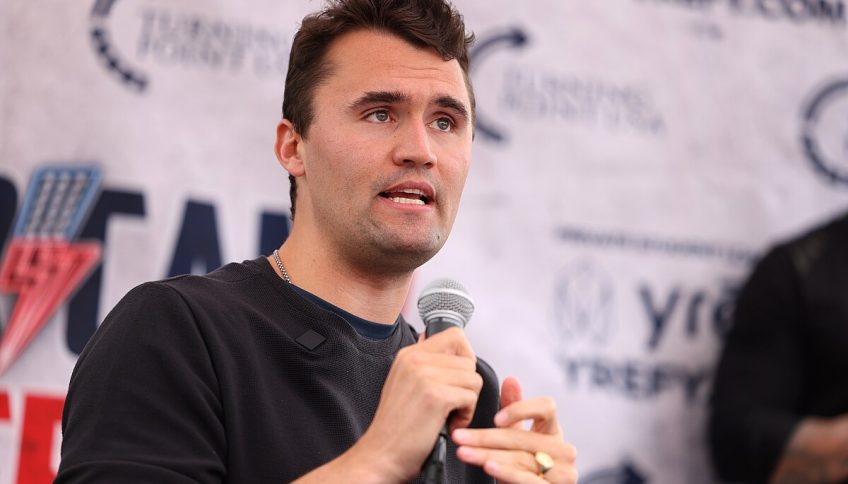
Kirk had become one of the most recognizable conservative figures in America. Through his organization, Turning Point USA, he built a youth movement around nationalism, Christian identity, and anti-establishment politics. He criticized universities, corporate media, and what he called the “cultural elite” that, in his view, manipulated public discourse.
In recent months before his death, Kirk had announced plans for a new documentary project investigating alleged government overreach during the pandemic—an endeavor reportedly involving former federal officials and whistleblowers.
Now, many wonder: could that project have placed him in danger?
Dr. R seems to think so.
“There are connections between what Charlie was working on and the timing of his death,” the doctor said cryptically. “He was about to expose something major—and then, suddenly, he was gone.”
The Silence of the Media
Equally troubling is how mainstream media outlets have largely ignored the whistleblower’s claims. When independent journalists attempted to publish Dr. R’s documents, their websites crashed. Accounts sharing the files were suspended, and fact-checkers labeled the claims “misleading.” Yet none have directly addressed the underlying question: Why is there no transparent autopsy report?
A former producer for a major news network admitted privately that the story had been “flagged for legal review,” effectively killing any potential coverage.
“The word from the top was simple,” the producer said. “Do not amplify. Do not speculate. Let it fade.”
That silence has only deepened public mistrust. On social media, hashtags like #CharlieKirkFiles and #DoctorRTruth have become rallying cries for those demanding transparency. Citizen journalists are pooling evidence, cross-referencing hospital staff rosters, and tracking data deletions—doing the work that professional media refuses to touch.
The Cost of Telling the Truth
Dr. R has reportedly lost their medical license pending investigation. Their home was vandalized, and they’ve since gone into hiding. Yet they remain defiant.
“They can take my career,” the doctor wrote in a recent encrypted message, “but they can’t erase what I know. The truth about Charlie Kirk’s death is out there—and eventually, it will surface.”
The courage required to defy an institution is immense. History has shown that whistleblowers often pay dearly for their integrity. But Dr. R’s persistence has ignited a national conversation—not just about Kirk’s death, but about the culture of control that defines modern America.

In a society where power and information are tightly managed, truth becomes dangerous. And those who speak it become enemies of the system.
A Nation at a Crossroads
Whether or not Dr. R’s claims hold up under investigation, one reality remains: the handling of Charlie Kirk’s death is shrouded in secrecy, and that secrecy breeds suspicion.
If his passing was indeed natural, why not release the full report? Why threaten those who ask questions? Why silence the one doctor brave enough to speak?
These are not the questions of conspiracy—they are the questions of democracy. Because when truth becomes conditional, so does freedom.
As investigative journalist Mara Linwood wrote in The Independent Sentinel:
“What’s at stake here is more than a man’s legacy. It’s the right of every citizen to know when truth is being buried under bureaucracy and fear.”
Charlie Kirk built his career on challenging narratives. Ironically, his death has now become the ultimate test of that principle.
Legacy and Unfinished Battles
Kirk’s supporters continue to honor his legacy through rallies, podcasts, and documentaries. His organization vows to continue his mission of “truth-telling in an age of deceit.” Yet among his followers, there’s a growing sense that the movement’s leader might have died for the very values he preached—transparency, faith, and defiance against corruption.
In the end, what makes this story so powerful is not merely the mystery surrounding his death, but the courage of one person willing to expose what they saw. Whether Dr. R’s revelations prove fact or fiction, their defiance has reignited a national reckoning about power, trust, and the fragile line between truth and silence.
Because sometimes, the most dangerous thing you can do in America is tell the truth—especially when the truth threatens those who control the story.
And for one doctor, that truth was worth risking everything.
Nhận xét
Đăng nhận xét